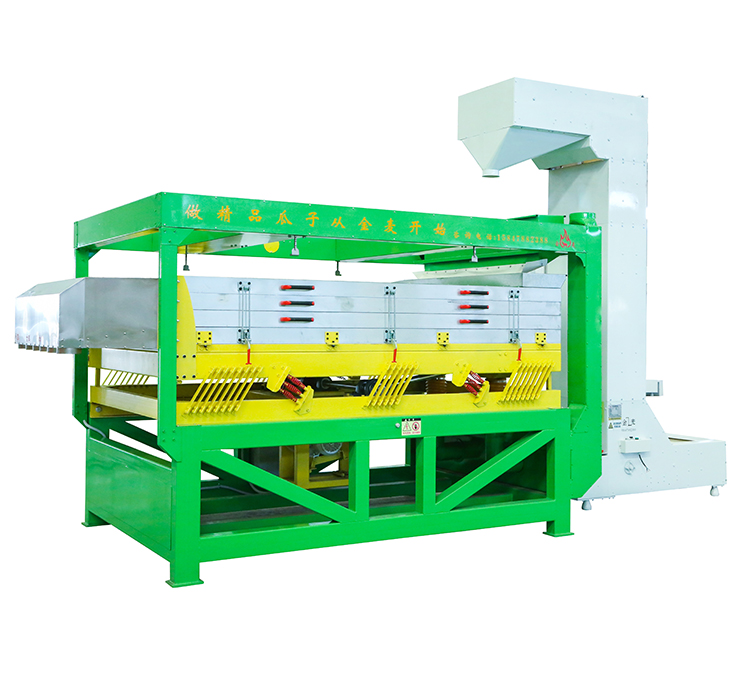
The material of the sieve is an important factor affecting the screening effect of the rod vibration sieve. Different materials of the sieve have differences in wear resistance, corrosion resistance, porosity, elasticity, etc. The specific effects are as follows:
1、 Wear resistance
Metal mesh: such as stainless steel mesh and manganese steel mesh, have high hardness and strength, and good wear resistance. Suitable for screening materials with strong abrasion resistance, such as ores, coal, etc. During the long-term screening process, it is possible to maintain the stability of the shape and size of the sieve holes, reduce the enlargement or deformation of the sieve holes caused by screen wear, and ensure screening accuracy.
Non metallic mesh: such as polyurethane mesh, although its wear resistance is also good, compared with metal mesh, there may be faster wear when dealing with high hardness and large particle materials. However, for some materials with moderate hardness, the wear resistance of polyurethane mesh is sufficient to meet the usage requirements, and it has good fatigue resistance, which can extend the service life of the mesh to a certain extent.
2、 Corrosion resistance
Stainless steel mesh: It has good corrosion resistance and can resist the erosion of chemical substances such as acid and alkali. Suitable for screening corrosive materials such as chemical raw materials, salts, etc. In humid or corrosive gas environments, stainless steel screen mesh is also less prone to rusting, which can maintain the stability of the screen mesh performance and avoid damage to the screen mesh caused by corrosion, thereby affecting the screening effect.
Polyurethane mesh: It has a certain degree of corrosion resistance, but its resistance to certain highly corrosive substances is relatively weak. When dealing with corrosive materials, it is necessary to choose a suitable polyurethane screen according to the specific properties and usage environment of the material, and take corresponding protective measures, such as regular cleaning, coating with anti-corrosion coatings, etc.
3、 Opening rate
Metal screen mesh: The porosity is relatively low, especially for fine mesh screens, where the diameter of the metal wire is thicker and occupies a certain area of the screen surface, resulting in a decrease in the effective screening area. This will affect the screening efficiency, slowing down the screening speed of materials on the screen surface and reducing processing capacity.
Polyurethane sieve: With a high porosity, the sieve area of polyurethane sieve is relatively large for the same mesh size, which can improve the material's permeability and increase screening efficiency. At the same time, a larger opening rate can also reduce the accumulation of materials on the screen surface, making the movement of materials on the screen surface smoother and improving the screening effect.
4、 Elasticity
Polyurethane screen mesh: It has good elasticity and can generate a certain elastic force on the material during the screening process, making the material bounce more violently on the screen surface, increasing the chance of contact between the material and the sieve holes, and improving the screening efficiency. At the same time, the elastic effect can also reduce the direct impact of materials on the sieve mesh, reduce the possibility of material clogging the sieve holes, and make the screening effect more stable.
Metal screen mesh: has poor elasticity and is generally a rigid structure. During the screening process, the collision between the material and the sieve is relatively rigid, which can easily lead to material accumulation around the sieve holes and increase the risk of sieve blockage. Moreover, metal screen mesh is prone to fatigue cracks after long-term material impact, which affects the service life and screening effect of the screen mesh.