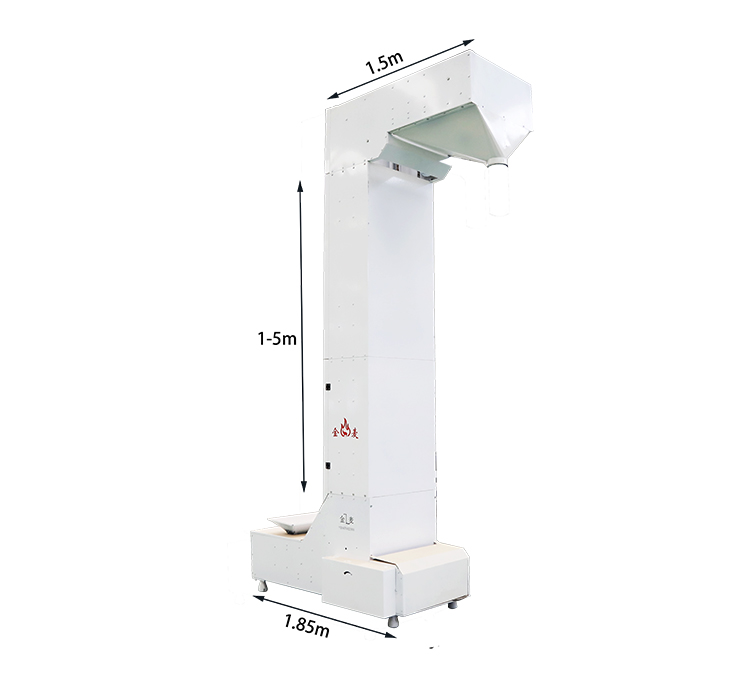
The common faults of non crushing elevators mainly include the following:
1、 Stuck fault
Reason for malfunction: Usually due to the pulley sleeve or guide wheel of the hoist getting stuck.
Handling method:
After confirming the stuck position, the machine must be stopped to troubleshoot. Dismantle and renovate according to the operating requirements, and inspect after maintenance is completed.
During the stuck process, do not forcefully operate to avoid aggravating the fault or causing danger.
2、 Fracture fault
Reason for malfunction: Mainly due to excessive load, components such as wire ropes, chains, or torque shafts break.
Handling method:
Stop the machine for inspection and carry out dismantling and renovation according to the operating requirements.
Replace the broken parts, and if the situation is severe, it may be necessary to purchase new components as a whole.
After the maintenance is completed, start the trial operation to ensure the normal operation of the equipment.
3、 Loose fault
Reason for malfunction: The connection parts of the hoist (such as sprocket bearings, drive shafts, etc.) have become loose.
Handling method:
Stop the machine for inspection and identify any loose components.
Tighten loose components and replace them if there is mechanical damage.
After the repair is completed, conduct a start-up test run to check for any remaining looseness issues.
4、 Feed malfunction
Reason for malfunction: The material suddenly stops and flips during the lifting process, which may be caused by external material force impact or mechanical failure.
Handling method:
For feeding faults caused by mechanical failures, check and repair according to the handling methods for stuck and broken faults.
If the feeding failure is caused by external force impact, stop the machine to eliminate the cause of the external force and check whether the anti vibration system of the hoist is normal.
5、 Unstable lifting fault
Reason for malfunction: The working speed of the hoist varies, and in severe cases, it may also experience jumping or shaking.
Handling method:
Check if the weight of the hoist exceeds the rated load. If it is overloaded, reduce the material load in a timely manner and carry out batch lifting.
After excluding weight factors, check whether the electrical and mechanical parts of the hoist are normal, and repair and replace the faulty points.
6、 Loose structure fault
Reason for malfunction: The structure of the hoist is loose, which usually causes shaking and even damages various parts and components.
Handling method:
Stop the machine and inspect the loose parts of the structure, tighten the screws or replace the loose components.
Check if the steel wire rope or chain is loose, and if it is loose, tighten the tension.
Check if the bearings are normal, and replace them as soon as possible if any abnormalities occur.
In summary, common faults of non crushing elevators include jamming, breakage, looseness, feeding failure, unstable lifting, and loose structure. For these faults, corresponding handling methods should be taken according to the specific situation to ensure the normal operation and production efficiency of the equipment. Meanwhile, regular maintenance and upkeep are also important measures to prevent malfunctions from occurring.