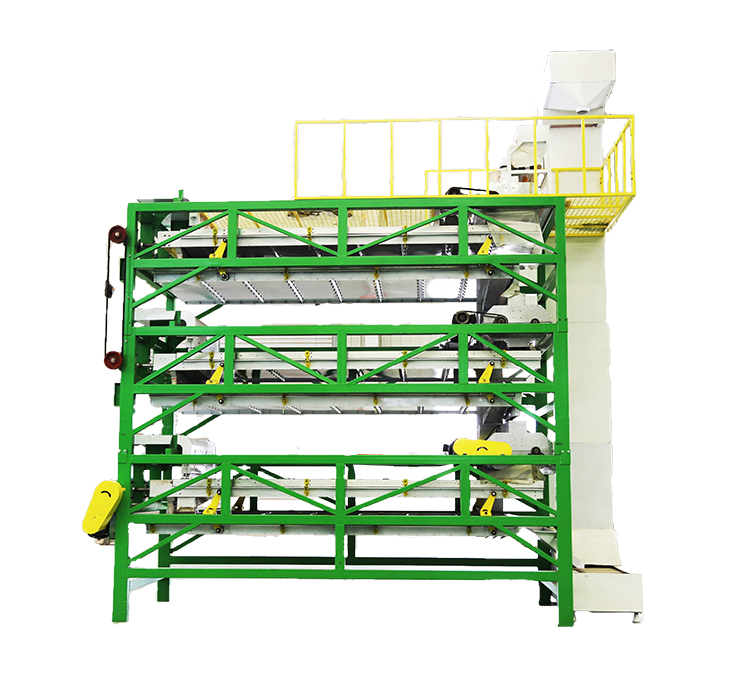
The gourd seed shelling machine is an important equipment for improving shelling efficiency, and its daily maintenance is crucial for extending its service life and ensuring shelling quality. The maintenance work should revolve around cleaning, lubrication, component inspection, and safe operation. The specific methods are as follows:
1、 Cleaning and maintenance
Daily cleaning of residues
After the shelling operation is completed, it is necessary to promptly clean the remaining gourd seed shells, debris, and impurities inside the machine. The accumulation of residues can clog the sieve or jam the transmission components, resulting in poor equipment operation or even damage. When cleaning, you can first use a soft bristled brush or compressed air to blow away surface dust, then open the casing and use specialized tools to remove accumulated debris inside, ensuring that there are no attachments on the surfaces of each component.
Regularly clean the sieve mesh
The screen mesh is the core component of the shelling machine, and its aperture size directly affects the shelling effect. If the sieve is blocked or deformed, it will lead to a decrease in shell peeling rate or an increase in grain damage rate. It is recommended to check the status of the sieve every week. If blockage is found, it can be rinsed with clean water or lightly brushed with a soft bristled brush; If the screen mesh is deformed or damaged, it should be replaced in a timely manner to avoid affecting the quality of peeling.
Keep the ventilation openings unobstructed
The shell stripping machine generates heat during operation, and if the ventilation port is blocked, it can cause the motor to overheat or even burn out. Before each use, check if the ventilation opening is blocked by debris to ensure smooth air circulation. If dust is found on the ventilation opening, it can be cleaned with a vacuum cleaner or soft bristled brush to avoid scratching with hard objects and damaging the ventilation structure.
2、 Lubrication and maintenance
Regularly add lubricating oil
The transmission components of the shell stripping machine, such as bearings, gears, and chains, need to be lubricated regularly to reduce wear. It is recommended to check the lubrication condition every 50 hours of operation. If the oil level is insufficient or the oil quality becomes dirty, it is necessary to replenish or replace the lubricating oil in a timely manner. Lubricating oil should be selected with a specialized model to avoid component damage caused by mixing.
Accurate maintenance of lubrication points
The lubrication methods for different components are different: bearings require direct dripping of lubricating oil; Gears need to be coated with lubricating grease; The chain needs to be evenly coated with lubricating oil using a brush. When lubricating, it is important to pay attention to the appropriate amount of oil to avoid excessive oil contamination of the seeds or insufficient lubrication.
3、 Component inspection and replacement
Check the transmission components
Check the tightness and wear of belts and chains every week. If the belt is too loose, it will cause slippage, and if it is too tight, it will accelerate wear and tear; If the chain is loose, adjust the tensioner. If it is severely worn, replace it. At the same time, check whether the gear meshing is good. If any abnormal wear or noise is found, it should be repaired or replaced in a timely manner.
Check the peeling roller
The peeling roller is a component that directly contacts the gourd seeds, and its surface wear can affect the peeling effect. Check the surface of the peeling roller monthly for smoothness. If there are pits or cracks, they should be repaired or replaced in a timely manner. When replacing the peeling roller, it is necessary to ensure that the size of the new and old rollers is consistent to avoid a decrease in peeling rate due to improper installation.
4、 Safe operation and storage
Standardize operational procedures
Before use, it is necessary to read the instruction manual and familiarize oneself with the equipment operation specifications. Before starting, check if all components are securely installed. During operation, avoid direct contact with transmission components by hand. After stopping the machine, cut off the power before cleaning or repairing.
Properly store equipment
When not in use for a long time, the equipment should be cleaned and dried, and stored in a dry and ventilated room, avoiding direct sunlight or rain. Before storage, rust proof oil should be applied to the transmission components to prevent rusting from affecting their next use.